Have you ever stood at your front door and wished you could press pause on a small, worrying uncertainty — to know who’s there before you draw the curtain?

This image is property of Amazon.com.

Arlo Video Doorbell HD | 2nd Gen — a first look
You’ll recognize the device by its clean white face and compact presence; it’s the kind of object that doesn’t demand attention but quietly changes the rhythm of your day. The Arlo Video Doorbell HD | 2nd Gen offers a head-to-toe video view, two-way audio, night vision, and a choice between wired or wireless installation, and those capabilities immediately reshape how you meet the ordinary arrivals at your threshold.
What it promises and why that matters
It promises a fuller view of your doorstep — literally and figuratively. When you begin to imagine the small interruptions that shape every hour (a delivery, a neighbor’s knock, the solitary figure standing under the porch light), you realize how much a camera like this offers not just surveillance but a kind of presence, a steady witness you can consult with your phone.
Arlo Video Doorbell HD | 2nd Gen | Wireless/Wired Option, 2-Way Audio, Night Vision, Head to Toe Video View, Integrated Siren | Live Stream | Real Time Notifications |180 Deg Wide View, White
$51.99 In Stock
Quick specifications at a glance
Use this table to get oriented quickly. It lists the essentials you’ll refer to when deciding how this doorbell will fit into your life.
| Feature | Details |
|---|---|
| Video resolution | HD (720p/1080p depending on mode and connection) |
| Field of view | 180-degree wide view, head-to-toe perspective |
| Audio | 2-way audio with built-in microphone and speaker |
| Night vision | Infrared/night vision for low-light recording |
| Connectivity | 2.4 GHz Wi‑Fi (direct connection) |
| Power options | Wired (existing doorbell wiring) or battery (wireless) |
| Smart home | Works with Amazon Alexa and Google Assistant |
| Alerts | Real-time notifications and customizable activity zones |
| Security features | Integrated siren, encrypted data transmission |
| Subscription | Optional Arlo Secure for cloud storage and AI detection |

First impressions in daily life
You’ll probably notice, first of all, how small decisions become easier: whether to ask a stranger to leave a package at the back, whether to let a neighbor in during a storm, whether to answer the door at night. The Arlo doorbell doesn’t slam the door on uncertainty so much as refract it into manageable information — a short video, a notification, a moment of conversation through the app.
The emotional quality of “always on”
There’s a subtle comfort in knowing you can see who’s at the door even when you’re upstairs or away. It’s not a dramatic comfort; it’s the kind that tides you over the small frictions of family life, deliveries, and chores. You begin to trust the device not just for safety but for smoothing the day.
Design and build: quiet, considered, domestic
The doorbell’s aesthetic is intentionally domestic: white, slim, and without unnecessary ornament. It fits in with entryway lights and mailboxes, and this quiet design matters because you don’t want a security device to feel like an accusation hanging over your threshold.
Materials and weather resistance
You’ll find the materials feel robust without being heavy; the button clicks with a satisfying, not jarring, press. Built for outdoor conditions, the unit is weather resistant, which matters when you think of how many packages and visits happen in drizzle or under the glare of a summer afternoon.
This image is property of Amazon.com.

Installation: wired or wireless, your choice
You can install the Arlo doorbell using existing doorbell wiring for a continuous power supply, or you can opt for the battery-powered, wireless route. Each path has its trade-offs: wired reduces the need to recharge, while wireless frees you from rewiring and allows more flexible placement.
Step-by-step practicalities
If you choose wired installation, you’ll rely on your chime transformer and a few minutes with a screwdriver — the instructions are clear and written to guide someone who isn’t a professional. If you choose wireless, you’ll quickly appreciate the freedom to shift the camera’s position but keep an eye on battery life and seasonal variations that can shorten performance.
Video quality: clarity and context
The HD video is designed to capture faces and packages with enough detail that you can often see a delivery label or identify a visitor. The head-to-toe framing is especially useful if someone is placing a package on the mat or crouching lower than eye level.
Real-world performance
In daylight, you’ll be pleased by the crispness; at dusk and under street lamps, the camera manages noise well. However, like all devices that rely on Wi‑Fi and compression, you’ll notice slight artifacts in fast motion — a hand moving quickly, someone jogging past — but the essential details remain clear.

This image is property of Amazon.com.
Field of view: 180 degrees and “head-to-toe”
This wide field of view is one of the doorbell’s defining practical strengths. You won’t find yourself wondering whether the camera missed where the package was placed; instead, you’ll often see the full interaction at the threshold.
How that changes what you notice
With a broader angle you’ll capture more contextual details: the posture of a visitor, the position of a stroller, the angle of a delivery driver’s van. Those details create a richer narrative around a simple event, which helps when you later review a clip or report a delivery issue.
Two-way audio and communication
Speaking through the built-in microphone and speaker is straightforward. You can have a short conversation as if you’re at the door, and the audio quality supports that kind of back-and-forth without constant lag.
Practical uses of two-way audio
You’ll use it for quick instructions — asking the courier to leave a package on the porch, telling a neighbor you’ll be right down — and occasionally for checking on an unexpected visitor. It’s less about surveillance and more about being present in a domestic way even when you’re not physically home.

This image is property of Amazon.com.
Night vision: seeing after dark
Arlo’s night vision uses infrared to keep the scene legible when the porch light is off or when it’s late. The video becomes monochrome but readable, and faces, packages, and movement remain discernible.
Limits and realistic expectations
If someone’s face is hat-shadowed or there’s no direct illumination, you’ll see outlines rather than facial detail. Night vision is good for establishing presence and basic identity, but it’s not a substitute for a well-lit entryway when you need clearer recognition.
Connectivity and privacy: security that matters
The doorbell connects to your existing 2.4 GHz Wi‑Fi, and Arlo emphasizes encrypted transmission to protect your videos. You’ll appreciate that the device doesn’t need a separate hub for basic operation, which keeps setup simpler.
Practical privacy considerations
You can set activity zones to limit notifications and recordings to the area you care about — your porch and doorstep rather than the sidewalk. You’ll also want to familiarize yourself with the app’s privacy settings, and consider whether to enable cloud storage or keep clips local if possible.
This image is property of Amazon.com.
The Arlo App: control in your pocket
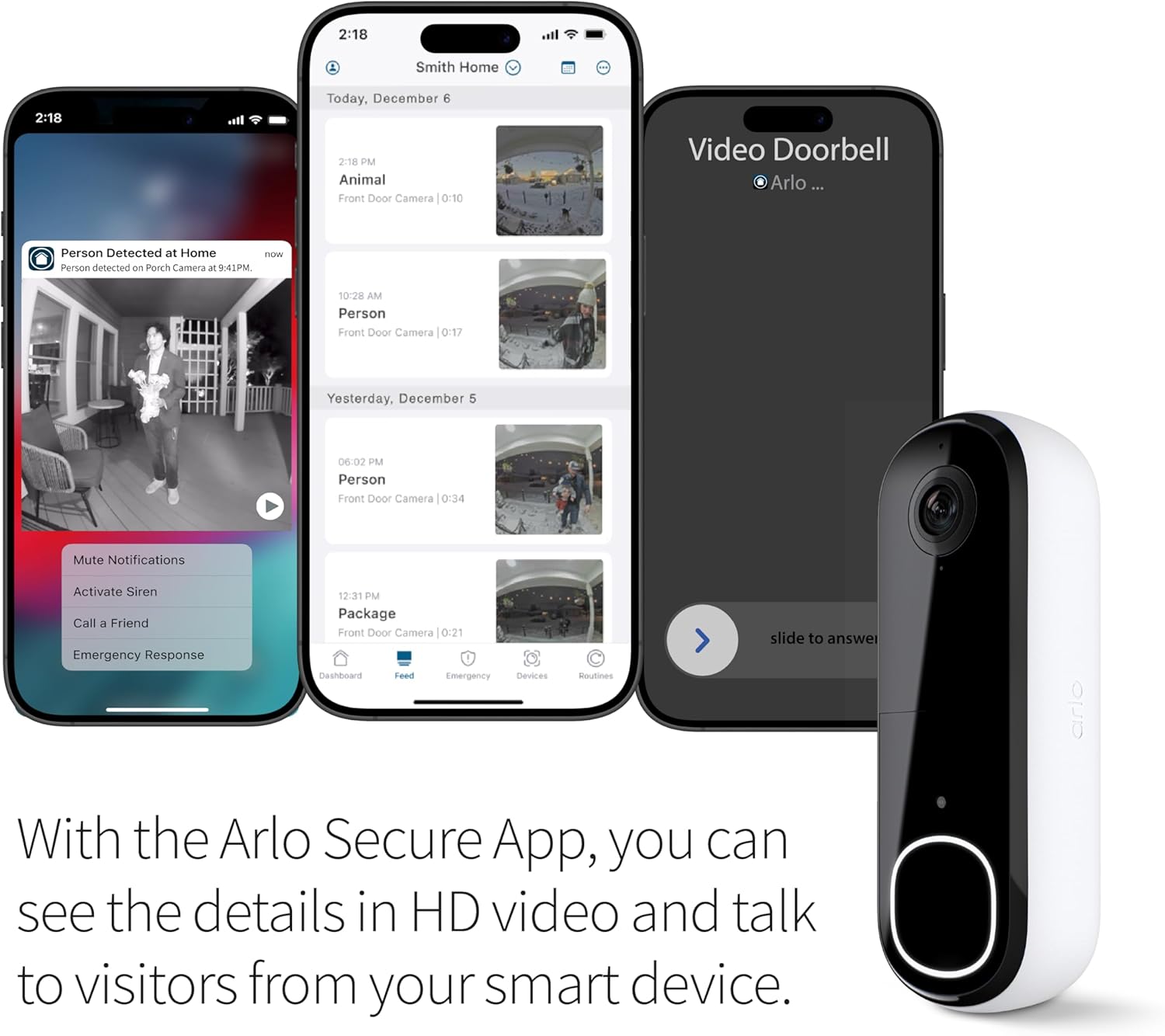
The app is where the doorbell comes alive: live streaming, instant notifications, the ability to trigger the siren, and review of recorded clips all happen there. You’ll find the interface intuitive, with clear options to save, share, or delete footage.
Customization and user experience
You’ll like the way you can tailor activity zones to reduce false alarms from passing cars or neighbors’ dogs. The app also lets you fine-tune motion sensitivity and set quiet hours, which helps the device fit into the rhythms of your home rather than demanding constant attention.
Notifications and responsiveness
Real-time notifications are immediate when someone rings or motion is detected, which is one of the doorbell’s most useful features. You’ll receive an alert, tap it, and see who’s there — a small exchange that can alter how you respond to the day.
Managing notification fatigue
You might initially receive many alerts, especially if you live on a busy street. That’s where the app settings and activity zones become important; with a few adjustments, you’ll move from noise to meaningful interruptions.
This image is property of Amazon.com.
Integrated siren: an extra layer of deterrent
The built-in siren is loud and can be triggered remotely from the app. You’ll use it primarily as a deterrent if you notice suspicious activity, and it’s reassuring to have an immediate option that doesn’t require physical presence.
When to use the siren
It’s most effective when combined with live monitoring; a siren announces to anyone at your door that they’re being watched and recorded. You’ll want to use it sparingly to avoid neighborhood alarm and to ensure you’re responding to real threats rather than everyday missteps.
Smart home compatibility: fits into your ecosystem
Arlo’s doorbell works with Amazon Alexa and Google Assistant, allowing you to integrate video feeds into routines and voice commands. If you have a smart display, you can have the live view pop up when the doorbell rings — useful when you’re in the kitchen and want to see who’s arrived.
Practical automation examples
You can set up a routine where your porch light turns on when motion is detected after sunset, or have your smart display show the camera feed when the doorbell rings. Those small automations smooth the interface between the physical and digital parts of your home.

This image is property of Amazon.com.
Expandability: building a cohesive system
You don’t have to stop at the doorbell; Arlo’s ecosystem includes additional cameras and accessories that extend coverage to your driveway, back door, or interior spaces. When you expand, you can create coordinated alerts and centralized video review, giving you a fuller picture of events around your property.
Choosing which expansions matter
Think about the weakest points in your current setup — is a side gate unmonitored? Does your backyard get deliveries? The right combination of devices will reduce blind spots and give you a cohesive set of eyes and ears.
Arlo Secure subscription: what it adds
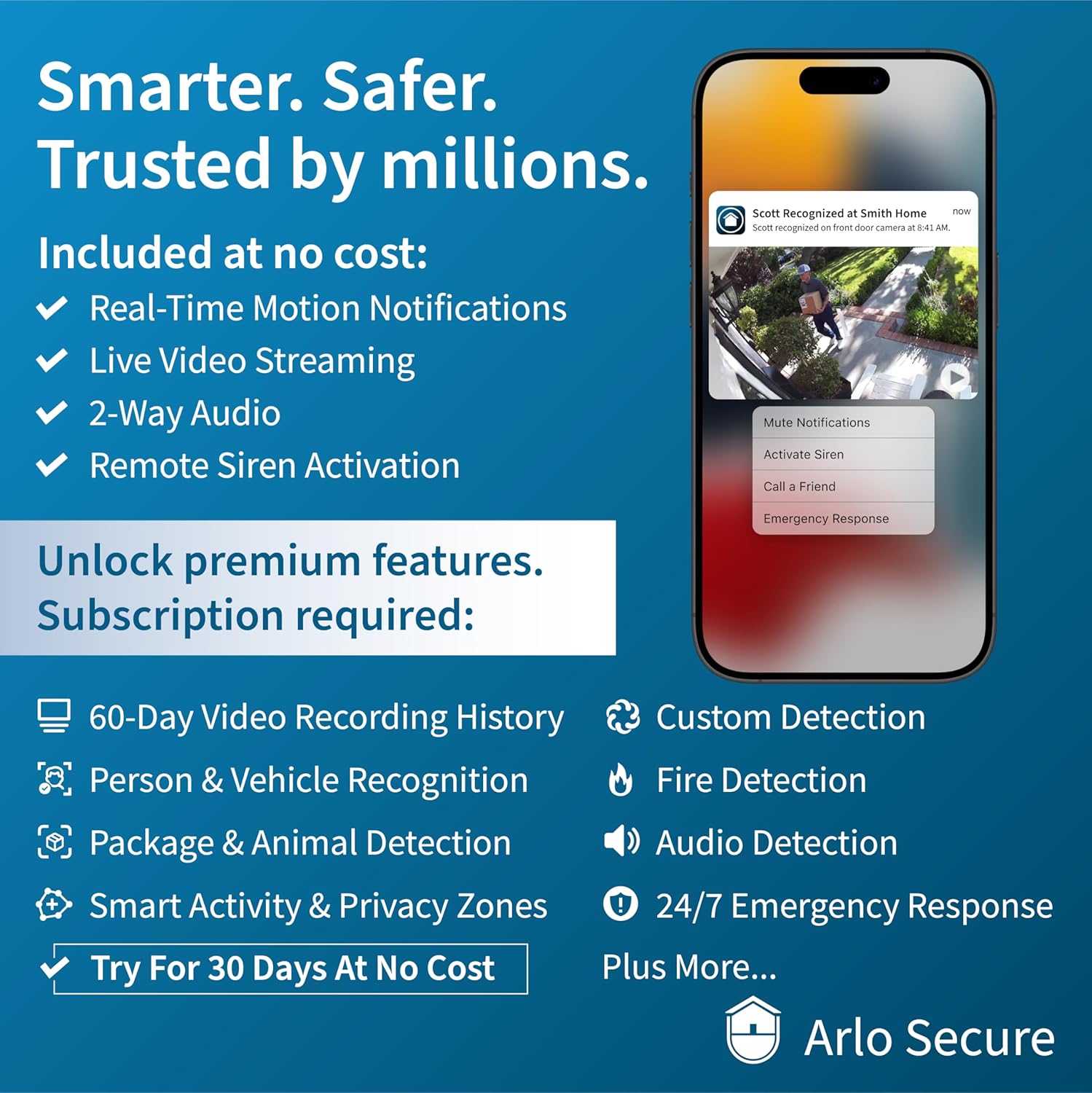
The optional Arlo Secure subscription unlocks cloud video storage, AI-powered object detection, and 24/7 emergency response options. If you want longer clip retention, smarter alerts that distinguish people from animals or vehicles, and the confidence of cloud backup, this subscription can be worth it.
Weighing subscription value
You’ll need to consider how often you need cloud storage and how much you value AI filtering of alerts. If you frequently review footage or need evidence for package disputes, cloud storage can save you a lot of hassle. If you primarily use live notifications and local review, you might not need the subscription immediately.
Real-world examples: how it changes everyday moments
Imagine you’re at work and receive a notification: a neighbor has left a package, but the path is wet and you want it moved to the porch. You speak through the camera, ask for the package to be put under the overhang, and feel a small relief that someone is responding to your request. Or imagine receiving an alert at night, seeing a person pacing in front of your house, and remotely triggering the siren to make them leave.
The subtle domestic shifts
Over time, you notice fewer missed deliveries and fewer anxious moments about unknown knocks. You’ll use the doorbell for small, human things — confirming that it’s safe for a child to cross the yard, checking whether a pet sitter has arrived — and those smaller moments become the device’s most meaningful contributions.
Pros and cons: balanced perspective
You’ll find a lot to like, and a few trade-offs to consider. The pros include wide-angle coverage, flexible installation, two-way audio, and the convenience of the app. The cons include dependency on a reliable Wi‑Fi connection and the potential cost of a subscription for full functionality.
Bullet points for clarity
- Pros: 180° view, head-to-toe framing, night vision, wired or wireless options, two-way audio, integrated siren, app control, smart home integration.
- Cons: Requires stable 2.4 GHz Wi‑Fi, potential subscription costs for cloud storage and advanced detection, compressed video artifacts in fast motion.
Comparison with similar doorbells
Compared to other popular video doorbells, Arlo’s focus on a wide field of view and integrated siren stands out. Some competitors offer slightly higher resolution or different subscription models, but Arlo’s balance of features and ecosystem compatibility is a strong choice if you value a wider vantage point.
What to choose based on your priorities
If you prioritize the widest possible view and ease of adding more cameras later, Arlo is a compelling option. If you prioritize ultra-high resolution or an entirely local storage approach, you may want to evaluate alternatives and weigh the subscription models carefully.
Placement and setup tips
Place the camera at a height that captures faces and packages without too much downward angle — typically between 48 and 54 inches works well. Orient the doorbell so that the entrance path is centered in the 180-degree view; a slight angle can prevent glare from nearby lights.
Small adjustments that matter
Use the app to set activity zones and test notifications during different times of day. If you opt for wireless, check battery life after the first few weeks and account for seasonal temperature changes that may affect performance.
Troubleshooting common issues
If you experience intermittent connection, check that your router is broadcasting on 2.4 GHz and that the signal strength at the door is strong. For audio clarity issues, ensure that the firmware is updated and that there’s no obtrusive wind or background noise at the mounting location.
When to call support
If the device fails to pair after multiple attempts, or the doorbell constantly drops connection despite strong Wi‑Fi, contact Arlo support — they can help with device-specific diagnostics and replacements if needed.
Maintenance and longevity
You’ll keep the camera’s lens clean and ensure the mounting screws remain snug. For battery-operated setups, plan for regular recharges and consider a routine check every few months to ensure firmware updates are installed.
Firmware and software updates
Keep the Arlo app and your device firmware up to date to benefit from performance improvements and security patches. Those updates often include minor fixes that enhance battery performance and notification reliability.
Privacy and neighborhood considerations
When you install a doorbell camera, you become part of a local visual network. You’ll want to be mindful of pointing the camera to avoid recording neighbors’ private spaces and to inform frequent visitors that you record at the door.
Community norms and legal concerns
Check local regulations if you’re in a place with strict recording laws; in most residential areas, doorbell cameras are common and legal, but being considerate and clear about your recordings helps maintain good neighborly relations.
Cost considerations and value
The initial purchase price is one part of the equation; factor in potential subscription costs for cloud storage and advanced features. If you use those features regularly — archived footage for incident review, AI-based alerts for fewer false notifications — the subscription can feel like a practical extension of the product rather than a separate expense.
Long-term financial thinking
Consider what value you place on saved time, reduced worry, and the ability to provide evidence when deliveries go missing. Those small, practical benefits add up, and for many people, they justify the total cost over a year or two.
Final verdict: what this means for you
If you want reliable, wide-angle monitoring of your front door with flexible power options and a straightforward app experience, the Arlo Video Doorbell HD | 2nd Gen will likely meet your needs. It’s not only a security device but also a small domestic companion that helps you manage daily interactions and find calm in otherwise small anxieties.
Who should buy it
You should consider this product if you receive frequent deliveries, want a broader view than a narrow camera provides, value two-way audio, and appreciate the convenience of app-based control with the option to expand into a larger home security ecosystem.
Practical checklist before you buy
You’ll want to verify a few things before committing: confirm your wifi is reliable at the door, decide between wired or battery installation, consider whether you’ll want cloud storage, and think about any additional cameras you might add. That small checklist will make your installation smoother and ensure the doorbell works for your specific routines and needs.
Final small piece of advice
When you mount the device, imagine the small interactions it will record — deliveries, children coming home, neighbors stopping by — and aim to capture them in a way that’s useful, respectful, and clear. The Arlo doorbell will then become less an instrument of surveillance and more a companion device that helps your household move through days with a little more ease and certainty.

Disclosure: As an Amazon Associate, I earn from qualifying purchases.