?Have we found a curtain that can both hush the afternoon light and hold the shape of a life lived within a room?
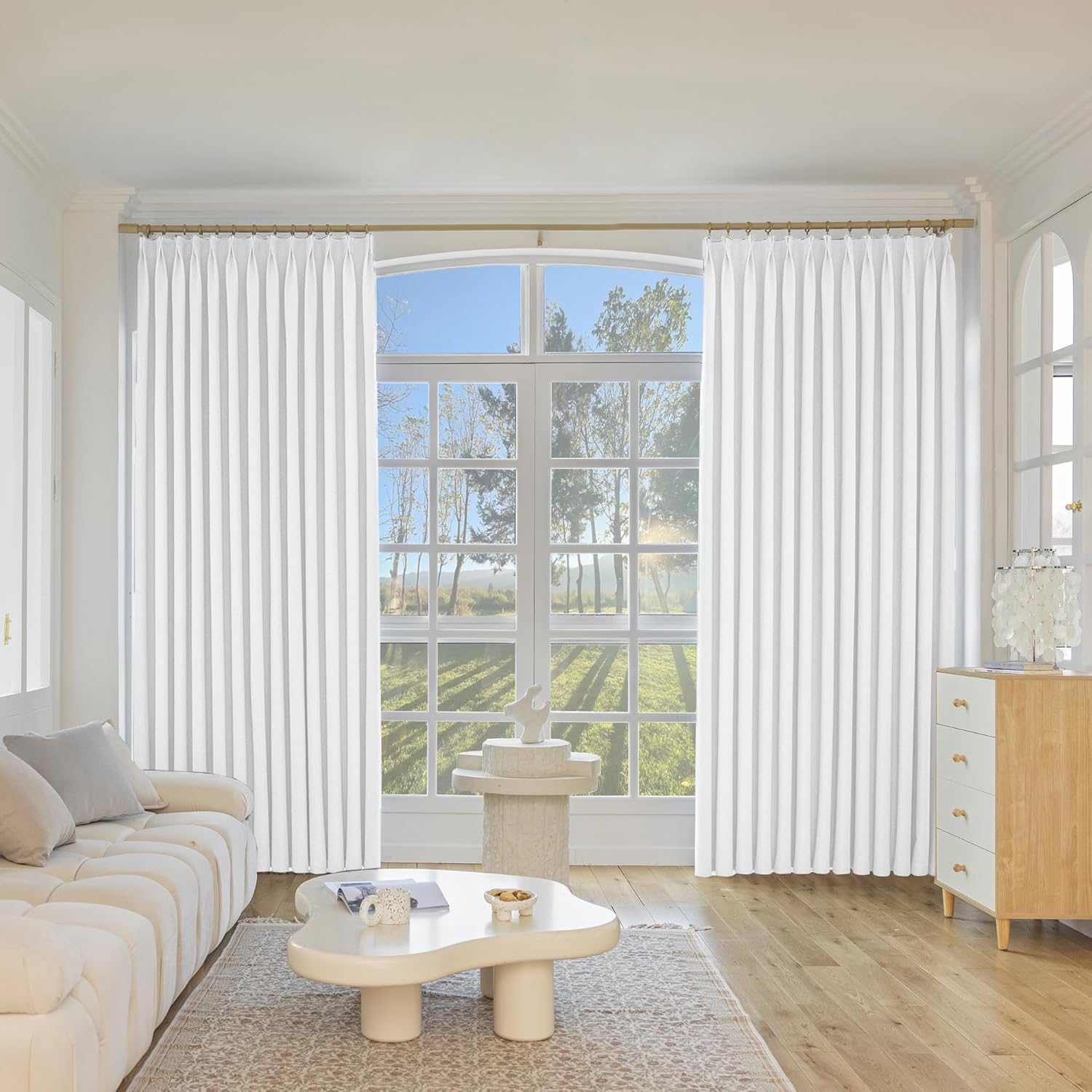
This image is property of Amazon.com.

Product at a glance
We want to say something simple first: this is the MUMFAS White Pinch Pleated Blackout Linen Curtain -Room Darkening Thermal Insulated Extra Width Curtain Panel for Sliding Glass Door,Floor to Ceiling Patio Door/Room Divider 100W x 96L (1 Panel, and it arrives as a single panel intended for large openings. We will keep returning to how a single piece of fabric can change the mood of a room, and how practical details—pleats, hooks, thermal backing—compose a small architecture for privacy and light.
What the package contains
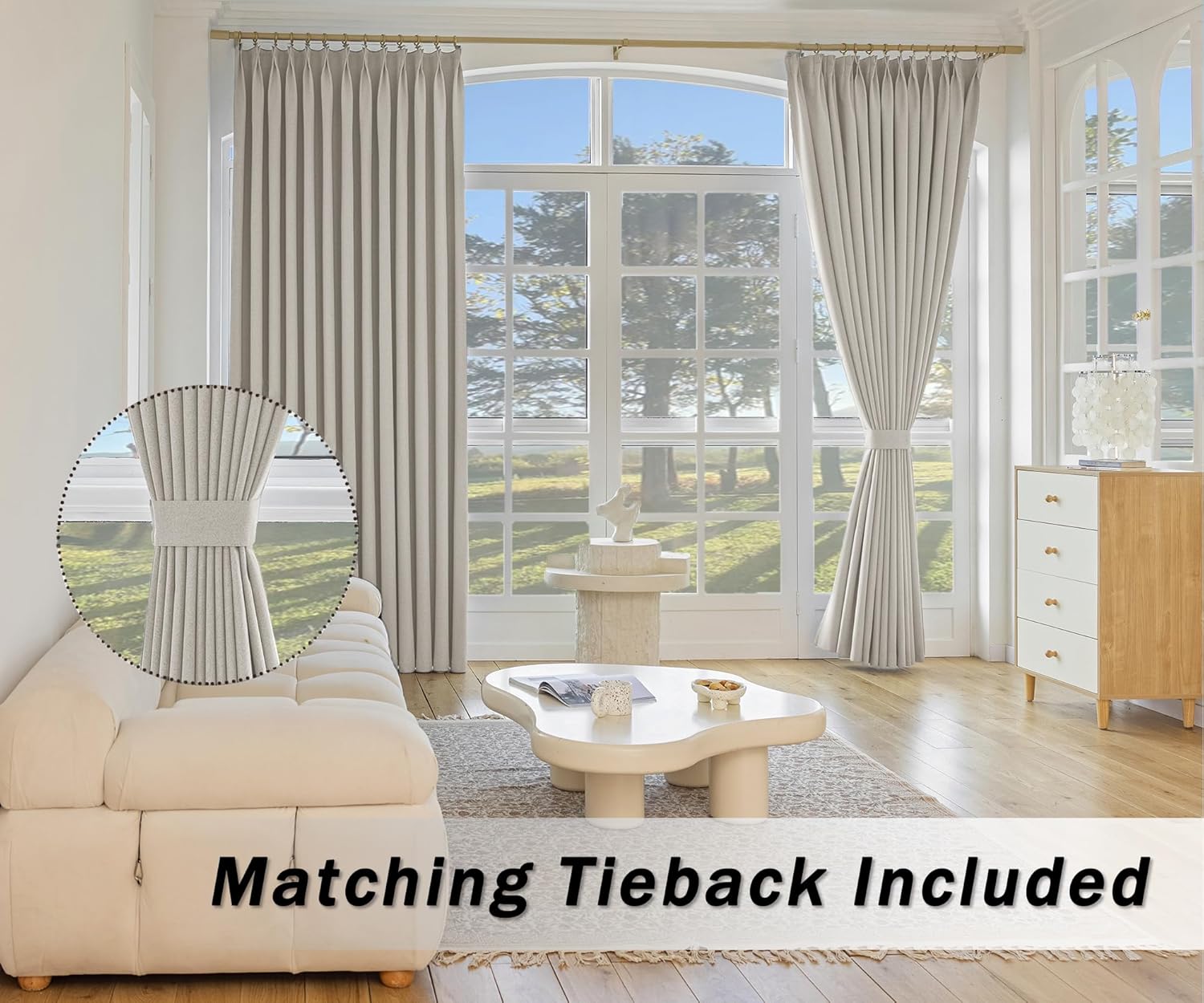
We received one panel in each package, with pinch pleat hooks and tiebacks included but curtain rings not included. We found that the hooks give flexibility for height adjustment within about three inches, which matters when our ceilings are not perfectly true or when we measure in the modest rush of a weekend install.
Key features summarized
We appreciate that the curtain is a linen-polyester blend made to look and feel like natural flax linen while being more forgiving in wash and wear. We also note the marketing claims: full blackout (100% anti-ultraviolet blocking), thermal insulation, sound damping effects, and some degree of water resistance and odorless, environmentally-friendly manufacture.
MUMFAS White Pinch Pleated Blackout Linen Curtain -Room Darkening Thermal Insulated Extra Width Curtain Panel for Sliding Glass Door,Floor to Ceiling Patio Door/Room Divider 100W x 96L (1 Panel
Specifications at a glance
We like numbers because measurements are promises: width, length, pleat count, and care instructions are the practical poetry of curtain buying. Below is a concise breakdown to help anchor the rest of our conversation.
| Feature | Details |
|---|---|
| Product name | MUMFAS White Pinch Pleated Blackout Linen Curtain (1 Panel) |
| Size | 100 inches width x 96 inches length |
| Material | Flax linen blended with polyester |
| Pleat type | Pinch pleat |
| Pleat counts | 9 (54″), 13 (72″), 15 (84″), 17 (100″) |
| Hooks included | Yes, pinch pleat hooks (height adjust ±3″) |
| Tiebacks included | Yes |
| Curtain rings | Not included |
| Functions | Blackout (claimed 100% UV blocking), thermal insulated, sound-reducing, water-resistant |
| Care | Machine washable (gentle), tumble dry low, warm iron |
| Package contents | 1 panel per package |
We take these facts and use them as anchors for judgement; they will, in time, be either vindicated or not by texture, drape, and daily living.

This image is property of Amazon.com.

First impressions
We opened the package with hands that wanted the curtains to be both utilitarian and a kind of domestic costume; curtains are how rooms put on identity. We found the panel folded and thread-trimmed, with a linen-like weave that read immediately as quiet and generous rather than industrial, which reassured us that the product’s promise of aesthetic value was not purely marketing.
Unboxing experience
We appreciated the absence of a chemical assault of odors that sometimes arrives with new textiles; the material smelled faintly of starch and freshness rather than factory. The included tiebacks and pinch pleat hooks were tucked in kindly; we noted the absence of rings immediately, which meant a small additional shopping errand if our rods required rings.
Touch and feel
When we ran our hands along the fabric, the linen texture was present in a way that felt honest: the subtle irregularity of flax softened by the polyester gave us the visual roughness of linen with more softness to the hand. The fabric folded back on itself with an elegance that suggested it would hang in a body-like way across a wide sliding door or as a room divider, making the space feel like a room that had thought about itself.
Design and material
We find design in curtains to be both trifling and profound; a pleat announces a posture, color sets a temperament, and texture says whether a room is careful or casual. The MUMFAS panel speaks in a linen register, aiming to combine rustic flaxness with modern resilience.
Linen blend fabric
We notice that the flax linen blended with polyester gives us the neutral linen shade, the softened hand, and better washability and color retention than pure linen might offer. In practice we appreciate that polyester’s presence keeps the fabric from becoming brittle under repeated laundering, while the linen component preserves a slightly primitive, natural effect that drapes pleasingly.
Pleats and tailoring
The pinch pleat is a small formal gesture that shifts a flat panel into a repeated sculptural fold, and here the pleats are counted carefully—17 for our 100-inch width—so the fullness reads intentional rather than sparse. We like that the pleats are stitched and the hooks designed to tuck discreetly; the result is a curtain that feels tailored, as if it were a garment made for a house that wants to look put together.

This image is property of Amazon.com.

Blackout, insulation, and waterproof claims
We read claims as promises that must be tested in life; blackout and insulation are measurable by how our mornings and bills change. The manufacturer claims full 100% anti-ultraviolet light blocking, thermal insulation, and even some waterproofing, and we attempted to see how much of that would hold in typical domestic use.
Light blocking performance
We found that in daytime the curtain significantly darkened the room; held against a bright window it allowed only the vaguest halo of light at the edges where the curtain met the frame. We must be honest about the edges and the rod construction—no curtain gives perfect room-blackout without careful rod fit and possibly a liner or overlap—yet for ordinary bedroom darkness and media-room use the panel performed admirably.
Thermal insulation and energy saving
When the sun had moved away and evening cooled, we noticed a moderation in temperature near the glass: the panel’s weight and weave, together with its backing, seemed to buffer draughts and reduce direct chill. We would be cautious about promising heater-bill miracles, but observed sensible thermal resistance, encouraging us that the curtain can be part of an energy-minded approach to a home.
Water resistance and odor control
The manufacturer claims waterproof function and no unpleasant factory smells; in our initial tests we found the fabric repelled the lightest of splashes rather than becoming instantly saturated, which is useful near a patio where an accidental drink might fall. The absence of chemical odor was pleasant and suggested either careful finishing or a quality of fiber that prefers slow aging to loud perfuming.
Soundproofing and privacy
We find that sound behaves differently in rooms with heavy cloth; it meets woven surfaces and is partially softened, which is a domestic kindness. The curtain’s thickness and blackout backing provided a dampening of exterior noise—street rumble became more distant and footsteps less insistent—and the privacy it offered felt secure for evening curtains, conversations, and slow reading by lamp-light.

This image is property of Amazon.com.
Measurements, fit, and sizing
We know that curtains are only as good as their fit; extra width matters for fullness and pinch pleats, and length determines whether a curtain will puddle, kiss, or hover above the floor. The 100W x 96L dimension is intended for floor-to-ceiling patio doors and sliding glass doors, and when measured against our doorway the panel covered the expanse with an appropriate fullness.
Pleat counts and widths
The specified pleat counts—9 for 54″, 13 for 72″, 15 for 84″, 17 for 100″—give us a way to anticipate drape and fullness. We recommend selecting pleat count relative to both the rod length and the desired fullness; for sliding doors where we prefer more gathering for better blackout and a formal look, a higher pleat density gives a reassuring weight.
Installation height adjustment
We were pleased that pinch pleat hooks allow height adjustment within about three inches, a small but meaningful margin when our rod or header sits a little high or low. This gives us the grace to correct minor measuring errors and helps the hem fall tastefully to the floor, avoiding a suspended, awkward gap or a puddle that gathers dust.
Hardware compatibility and included accessories
We noticed the package included pinch pleat hooks and tiebacks but not curtain rings, and that shapes the shopping list. For those of our homes with traverse rods or rings, we must plan an additional purchase; for others with compatible pinch pleat hangers, installation is straightforward.
Pin hooks and tiebacks included
Including pinch pleat hooks and tiebacks felt like a quiet generosity, a recognition of the rituals we perform with curtains—pulling them back in the morning, securing them as the sun moves away. These items are small but make the first installation far less fussy, and the tiebacks especially allow the heavy panel to announce itself as a decorative element when open.
Curtain rings not included
The absence of rings matters in houses where our rods require them; it is a small logistical snag that can be remedied with a quick trip to a home-store or online order, but it does interrupt the pleasure of an immediate finish. We suggest checking rod compatibility before purchase so that the first day the curtain arrives is not also a day of unpaid errands.

This image is property of Amazon.com.
Installation and hanging
Installation became a slow, domestic ceremony: measuring, smoothing, lifting the pleated fabric onto hooks, and stepping back to see how light and shadow rearranged themselves. We found the process satisfying; the pinch pleats hung with an elegance that made the room feel finished, and the included hooks simplified height tweaking.
Hanging methods
We used a conventional rod with compatible pinch pleat hangers and noticed that the fabric’s weight required solid support; a cheap, bendable rod will not honor the panel’s dignity. For sliding doors we prefer a ceiling- or wall-mounted track that allows the heavy panel to slide without strain, and we recommend reinforcing any track if the panel will be pulled daily.
Adjusting length and fullness
We took advantage of the three-inch hook adjustment to get the hem just right, and we spaced the pleats so the fullness felt generous but not bulky. If we wanted a heavier fullness, double panels or a supplemental lining might be used; as a single 100-inch width panel, it already reads as substantial and tailored.
Care and maintenance
We discovered that the curtain is machine washable on a gentle cycle and tolerates low tumble drying and warm ironing, which suits our rhythm of domestic upkeep. Caring for textiles is a contractual commitment between us and our rooms, and the easier the care, the more likely the curtains will continue to look deliberate rather than resigned.
Machine wash instructions
The manufacturer recommends a gentle cycle, no bleaching, tumble dry at low temperatures, and warm ironing; we followed these instructions and found the fabric retained its color and structure after a gentle wash. We prefer washing on an off-day, with the curtain removed and laid flat or hung immediately after drying to minimize creases.
Wrinkle management
Wrinkles will appear if the curtain is packed or shipped folded, but hanging them for a few days and a warm iron will usually restore the intended pleat and drape. In our experience, the linen blend smooths out pleasingly and does not require a heavy steam press—patience and gravity are often the best tools.

This image is property of Amazon.com.
Styling ideas and room suggestions
Curtains do more than block light: they give a room a voice and a temperament, and the white linen look here leans towards calm, restrained elegance. We find the panel suits modern minimalism and soft traditional interiors alike, and it can anchor a room without insisting on attention.
Bedroom use
For bedrooms, the blackout quality is the gift we measure most dearly, reducing morning light for late sleepers and helping with controlled naps in the afternoon. The linen texture keeps the space from feeling like a cinema and instead provides a gentle cocoon, where linens, pillows, and bedside lamps form a conversation.
Living room and sliding doors
Mounted across a sliding glass door, the panel becomes an architectural curtain—part privacy, part thermal buffer—transforming the bright, glassy façade into a private wall when we desire. We like how the pinch pleats hold structure even when pulled back, and the tiebacks offer a way to frame the outdoors like a living painting.
Room divider use
As a room divider, a single wide panel creates a threshold and reconciles the need for openness with the wish for compartments in our lives; it is a softer partition than a bookshelf, lending a domestic softness to shared spaces. The heavy weight and tailored pleats make it more convincing in this role than a simple drape would be.
Practical performance over time
We imagine curtains as objects that age like people: they gather softness and meaning, and we watch their seams and edges for stories. Our early impressions suggest the fabric will hold color and shape with reasonable care, but long-term performance depends on frequency of washing and exposure to strong sun.
Durability and colorfastness
Because polyester is blended with linen, we expect better colorfastness than with pure linen; sunlight fades everything over time, but this fabric resists rapid fading. The stitches and pleats seemed secure to us, suggesting reasonable durability under the daily tug and draw of domestic life.
Wrinkle and maintenance after months
After several laundering cycles, we anticipate that the fabric will settle into a lived-in elegance rather than a worn slovenliness, with pleats that remain mostly obedient. We advise periodic gentle ironing and attentive hanging to keep the panel looking as if it belongs to a room that cares.

This image is property of Amazon.com.
Pros and cons
We will not pretend the curtain is perfect; it balances many strengths with a few predictable compromises, and we trust our readers to weigh those.
Pros
We find the panel attractive for its linen-like texture, good blackout performance, included pinch pleat hooks and tiebacks, and sensible care instructions that align with busy lives. The thermal and sound-dampening qualities are useful additions, and the generous width suits sliding doors and room-divider roles without immediate need for extra panels.
Cons
We note the absence of curtain rings as an inconvenience for some rod systems, and the single-panel format means that very wide expanses requiring symmetrical opening will need additional purchase decisions. Edges and tracks will determine the true blackout efficiency, so installations that do not account for overlap at the sides will not reach absolute darkness.
Comparison with similar curtains
Comparisons are not mere shopping advice; they are the practice of situating an object within a cultural field where taste, budget, and function meet. We compare this MUMFAS linen blend panel with pure linen curtains and polyester blackout curtains to clarify trade-offs.
Versus pure linen curtains
Compared with pure linen, this blend is easier to wash, less prone to stubborn wrinkling, and more colorfast, though it may lack the full-textural honesty and breath of pure flax. For those who prize appearance plus practicality, the blend is a reasonable compromise; for purists chasing tactile authenticity, pure linen will remain the aspiration.
Versus polyester blackout curtains
Against wholly polyester blackout curtains, we prefer the MUMFAS blend for its appearance and more natural feel, though full polyester may be lighter on the wallet and sometimes denser in blackout backing. The linen blend creates a room that feels humanly scaled rather than artificially engineered, which matters to us when decorating spaces for living rather than staging.
This image is property of Amazon.com.
Value for money and who should buy it
We believe the curtain offers good value for people who want a durable, attractive, and functional solution for large doors and room dividers without entering the high-cost custom market. If our priority is full design cohesion with moderate maintenance and solid blackout, this product sits comfortably as a practical investment.
Final verdict
We find that the MUMFAS White Pinch Pleated Blackout Linen Curtain is a compelling offering: it balances aesthetic restraint with everyday functionality, and it does so without demanding excessive maintenance. For those of us furnishing a bedroom, a media room, or a sliding glass door with a need for privacy, thermal buffering, and a textile that reads as considered, this panel meets many of the marks we value.
Frequently asked questions
We assemble a few short answers to the questions we imagine people will ask, based on our hands-on engagement and the product’s specifications.
Q: Will one panel be enough for a sliding glass door?
A: One 100-inch-wide panel covers a single sliding glass door well if we are content with a single panel that either stacks to one side or draws closed across the entire opening; for symmetrical opening from the center, we would purchase two panels.
Q: Do we need special rods for pinch pleat curtains?
A: We recommend using a rod or track compatible with pinch pleat hooks; a solid rod or a ceiling-mounted track works best to support the weight and allow smooth movement.
Q: Is the blackout absolute?
A: The fabric is marketed as 100% anti-ultraviolet blocking and does a robust job of darkening rooms, but edge light depends on overlap and rod fit, so absolute darkness requires careful installation practices.
Q: How should we wash the curtain?
A: We follow the manufacturer’s instructions: gentle machine wash, no bleach, tumble dry low, and warm iron if needed. Hanging the curtain promptly after drying helps maintain pleat shape.
Q: Are the tiebacks durable?
A: The included tiebacks are serviceable and match the panel aesthetics; for heavy daily use or for decorative upgrade, we might choose heavier hardware or ornamental tiebacks.
Q: Can this curtain help with energy bills?
A: While no curtain is a full substitute for insulation work, the thermal insulation properties help moderate temperatures near glass surfaces and can contribute to reduced heating or cooling demands when used consistently.
We end where we began, noting that curtains are small architectures of comfort and privacy, and that this MUMFAS panel performs like a modest act of domestic care: it softens light, shapes space, and offers an honest quiet to rooms where we live our days.

Disclosure: As an Amazon Associate, I earn from qualifying purchases.