
Have you ever found yourself staring at an awkwardly long lamp or a set of golf clubs and wondering how on earth you’ll keep them from rattling their way to ruin in transit?

This image is property of Amazon.com.

Product Overview
You’re looking at TAPE LOGIC 6x6x72 Tall Corrugated Boxes, Tall, 6L x 6W x 72H, Pack of 15 | Shipping, Packaging, Moving, Storage Box for Home or Business, Strong Wholesale Bulk Boxes because sometimes the things you own do not fit the world’s standard dimensions. These boxes are meant to be that rare, patient object that accommodates the unusually tall and long — a practical answer to packing needs that otherwise force you to improvise with tape and hope.
What this product is for
You’ll use these tall corrugated boxes when you need end-loading convenience and structural reassurance. They substitute for mailing tubes in some cases and give you a rectangular, stable container for odd-shaped, long items: lamps, umbrellas, fishing rods, shelves that won’t disassemble, or sports gear that resists folding. Think of them as the tall closets of the cardboard world: they accept things upright without fuss.
Key specifications at a glance
Below is a quick table to help you compare the essentials before you commit. You can scan it and know whether these boxes answer your immediate problem without reading through every sentence that follows.
| Feature | Detail |
|---|---|
| Product Name | TAPE LOGIC 6x6x72 Tall Corrugated Boxes, Tall, 6L x 6W x 72H, Pack of 15 |
| Pack Size | 15 boxes |
| Dimensions (Interior) | 6 in L x 6 in W x 72 in H |
| Orientation | End loading |
| Corrugation | 200#/ECT-32 kraft corrugated |
| Use Cases | Shipping, packaging, moving, storage |
| Reusability | Reusable and recyclable |
| Country of Origin | Made in the USA |
| Best for | Irregular long items (lamps, golf clubs, fishing rods, umbrellas, shelving) |
| Strength | Rated for typical parcel use; ECT-32 indicates good stacking and burst resistance |
TAPE LOGIC 6x6x72 Tall Corrugated Boxes, Tall, 6L x 6W x 72H, Pack of 15 | Shipping, Packaging, Moving, Storage Box for Home or Business, Strong Wholesale Bulk Boxes
First impressions and unboxing
When you open a pack of 15, you’ll notice how compactly they nest together. The first sensation is practical: these boxes are not showy, they are matter-of-fact. Their kraft color carries a promise of utility rather than decoration. You’ll appreciate how each box feels solid in your hands — not flimsy, but not overbuilt either.
How they arrive and what you can expect
They come flattened and taped or banded together, which saves space in your garage until you’re ready. Because they’re end-loading, you’ll expect a quick funneling of the item from one end and a reassuring, clean closure at the other. Each box presents a utilitarian aesthetic, the kind that quietly says, “I will hold this.”
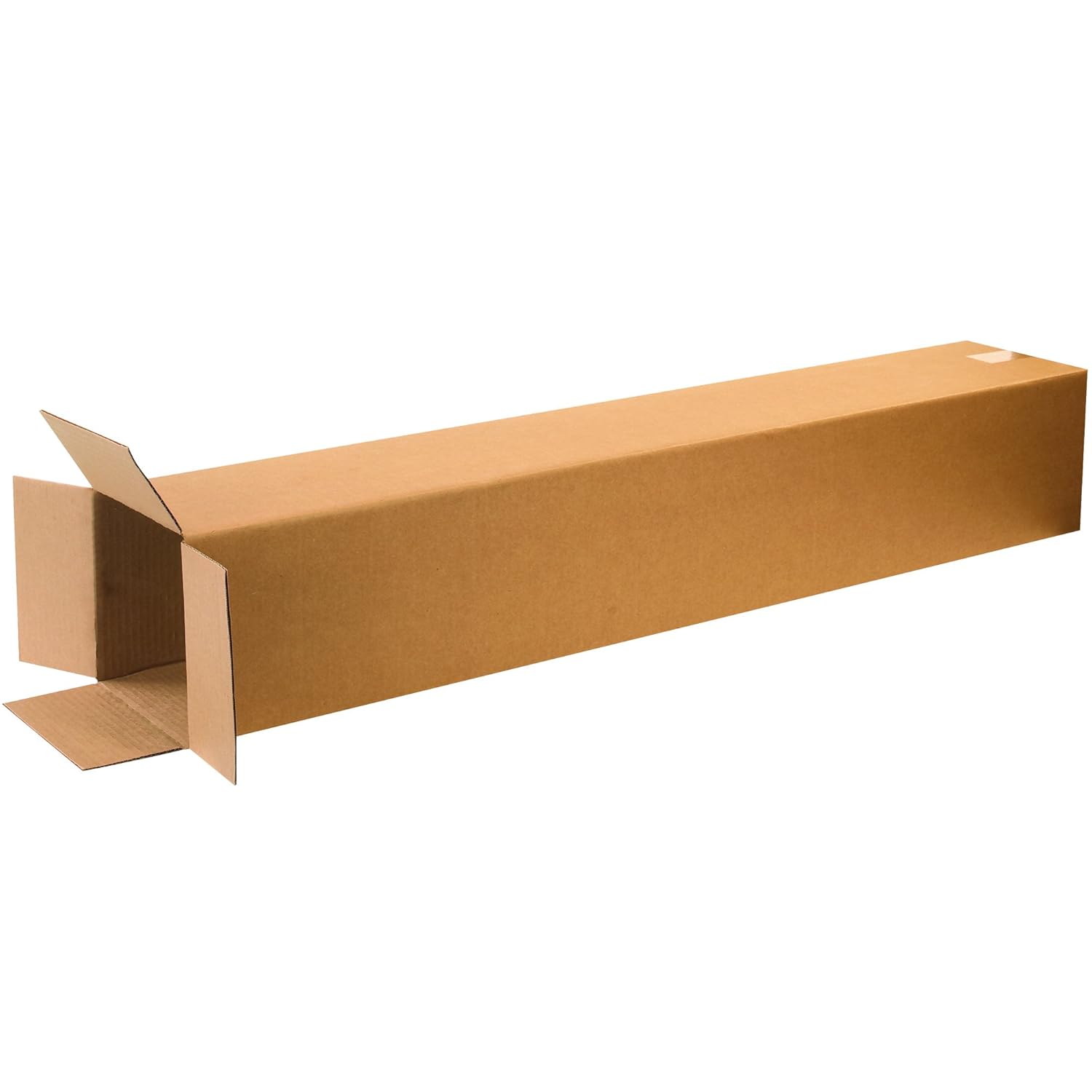
This image is property of Amazon.com.

Construction and materials
There’s a subtle honesty to kraft corrugated cardboard. You can feel it in the edges, the ridges of the corrugation, the slight roughness of the fiber. The 200#/ECT-32 specification names a strength you can count on for many household and business shipping needs.
Corrugation quality and what ECT-32 means for you
ECT-32 refers to the Edge Crush Test rating, a common measurement of how much resistance the cardboard provides vertically — important when boxes are stacked. For you, this means these boxes offer solid protection against compression and handling within typical parcel systems. They’re not industrial-grade for extremely heavy loads, but for what they’re designed to carry — long but relatively light to moderate-weight items — they’re appropriate.
Kraft cardboard and sustainability
Kraft corrugated is known for both durability and recyclability. You’ll find that these boxes are reusable if you’re cautious with your packing technique, and when it’s time to part with them, they recycle easily. Made in the USA, they also remove a layer of concern about long international supply chains for many buyers.
Dimensions and fit considerations
A 6 x 6 x 72 inch internal space invites a certain kind of packing choreography. You’ll measure twice and maybe three times to make sure your object aligns with the narrow width but generous height. If your object is just a fraction too wide or has an irregular girth, you’ll need to consider protective padding.
How to measure your item properly
Place your item against a flat surface and measure its longest point and widest diameter. Because the box is only six inches across, anything thicker than 5.5 inches will need protective measures or a different box. For rods, poles, or disassembled shelving, length is the primary variable. If you can stand the item upright in the box without bending or forcing, you’re in the clear.

This image is property of Amazon.com.

Use cases: when these boxes feel indispensable
You’ll find situations where these boxes aren’t just convenient — they’re almost the only sensible solution. When you’re shipping a floor lamp that refuses to be dismantled, or sending golf clubs to a distant tournament, or moving a set of long curtain rods, these tall boxes become the quiet helpers that let you sleep at night.
Shipping irregularly-shaped items
Irregular items are often the most nerve-wracking to pack. You’ll appreciate that these boxes accept odd profiles without crushing them. Use foam, paper, or bubble wrap to anchor the item in the center and prevent impact at the ends.
Replacing mailing tubes
When a tube won’t do because of a flat attachment, a delicate headpiece, or awkward contours, these tall corrugated boxes act as a practical alternative. You’ll get rectangular stability and an easier time sealing compared to scissors-and-tape gymnastics with cardboard sheets.
Storage and moving
If you’re moving a student’s dorm lamp, a spouse’s fishing rod collection, or heirloom banners and poles, these boxes make stacking and labeling straightforward. Their narrow footprint allows clever vertical storage in a garage or closet where space is at a premium.
Packing technique and sealing tips
You might be impatient or in a hurry, but a few thoughtful minutes spent packing will pay dividends. The end-loading style asks you to consider top and bottom protection more than you might with a standard box.
Padding and bracing
Start with a base of padding: crumpled kraft paper, foam, or bubble wrap. Slide the item in gently and fill any lateral gaps to prevent swinging. For objects with fragile ends, place padding at both ends and add internal braces if the item could shift during rough handling.
Sealing for shipping
Use strong packing tape along the open end seams and consider H-taping the top and bottom for added security. If your box will face professional package sorting, mark “This Side Up” and “Fragile” where appropriate. You’ll reduce surprises and the likelihood of someone stacking heavy things atop your package.

This image is property of Amazon.com.
Strength testing: how these boxes perform under pressure
You don’t need a lab to feel whether a box can withstand a journey. Simple tests replicate the stresses your shipment will encounter.
Simulated handling and stacking
Place a comparable weight inside, tape it shut, and allow someone to lift it by the middle. If the box remains square and doesn’t creak, you’ve passed a basic handling test. For stacking, place a few similar-weight objects atop the closed box and watch for compression on the edges. ECT-32 gives you confidence that moderate stacking won’t collapse the box, but avoid piling extremely heavy objects on many boxes at once.
Transit roughness
You can simulate transit by bumping the box against surface edges or dropping it a foot onto a carpeted floor. If your padding keeps the item from contacting the walls, you’ll have done the essential work needed for safe shipping.
Durability in repeated use
Because these boxes are reusable, you can repurpose them several times if you’re gentle with seams and corners. You’ll notice that tape removal and re-taping is the main wear-and-tear factor. Store them flattened when not in use to extend their life, and rotate which side bears weight in storage to avoid permanent compression.
Repairing and reinforcing
If a corner develops a slight tear, you can reinforce it with an internal patch of corrugated cardboard and some tape. You’ll find that small repairs restore much of the structural integrity if you handle them carefully.

This image is property of Amazon.com.
Environmental considerations
You’ll care about whether your packing choices reflect your values. Kraft corrugated is among the more sustainable packaging materials when used mindfully.
Reusability and recyclability
These boxes are designed to be reused and are recyclable. You can repurpose them for storage or donate them to community groups that move often. When you finally recycle, remember to remove tape and labels when possible to streamline processing.
Carbon footprint and local manufacturing
Being made in the USA reduces long-haul shipping emissions compared to some imported boxes. If you’re balancing environmental concerns with practical needs, buying a sturdy, locally made box that gets reused multiple times is often better than single-use options.
Bulk buying and cost-effectiveness
You’re buying a pack of 15, which will serve you well if you have ongoing shipping needs or a storeroom full of tall items. For small businesses, these boxes become cost-effective when you compare replacement costs and the time saved not having to custom-build solutions for each shipment.
Who benefits most from a pack of 15
Small retailers, galleries shipping long framed pieces, local moving services, and households with recurrent long-item shipments will notice savings and convenience. If you only need one occasional box, a single purchase might feel like overkill; but if you’re mailing multiple items over time, buying in bulk reduces per-unit cost and the friction of repeat ordering.

This image is property of Amazon.com.
Pricing and value perception
The label “wholesale bulk boxes” implies value; what you’re buying is function plus the comfort of consistency. You’ll weigh the cost against the alternatives: custom crates, mailing tubes, or expensive protective cases. Often, these corrugated boxes strike a balance between affordability and protection.
Hidden costs to consider
Consider tape, padding, and labels as line items. If your shipping requires special handling, insurance, or drop-off fees, those will add to your calculation. Factor in the time saved by having a ready-made size instead of improvising with multiple small boxes and tape.
Pros and cons — a practical summary
You’ll want a clear list to summarize what this product will give you and what limits to be aware of. Below, the essence of those trade-offs.
Pros
- Tailored to long, narrow items that don’t fit standard boxes.
- End-loading design simplifies insertion and sealing.
- Sturdy ECT-32 corrugated cardboard provides good stacking strength.
- Reusable and recyclable kraft material.
- Pack of 15 provides bulk savings for frequent users.
- Made in the USA, reducing long supply chains.
Cons
- Narrow 6-inch width limits what can fit inside without padding or disassembly.
- Not suitable for very heavy items or those requiring rigid crates.
- Requires careful internal padding for fragile ends.
- Bulk pack may be more than needed for one-off shipments.

This image is property of Amazon.com.
Comparison with nearby alternatives
You could use mailing tubes, custom wooden crates, or disassembled packing with bubble wrap. Each alternative has trade-offs you’ll want to consider.
Mailing tubes vs. tall corrugated boxes
Tubes are ideal for cylindrical evenly shaped items but fail when an item has flat or fragile components stretching along its length. You’ll prefer a rectangular box when the item has an irregular cross-section or delicate appendages that prefer flat support.
Wooden crates and rigid solutions
A wooden crate brings superior protection for very heavy or incredibly fragile items but also brings cost, weight, and disposal complexity. For most household and many small-business shipments, these corrugated boxes are the middle ground — protective enough without the expense and hassle of a crate.
Practical scenarios and step-by-step packing examples
You’ll benefit from concrete packing examples. Here are a few likely situations and how you might approach them.
Packing a floor lamp
- Disassemble any removable shades or bulbs and pack them separately.
- Wrap the lamp base and pole sections in bubble wrap.
- Place padding at the bottom of the box and stand the lamp upright.
- Fill lateral space with crumpled paper or foam to prevent tilt.
- Seal the open end with H-tape and label the box “Fragile, Upright.”
Shipping golf clubs
- Remove or protect heads with head covers and wrap shafts together.
- Anchor the club heads with foam or bubble wrap to prevent movement.
- Insert vertically with a base cushion; fill space between clubs and walls to prevent rattling.
- Tape and label clearly; consider insurance for valuable clubs.
Storing fishing rods or umbrella sets
- Wrap each rod or umbrella in paper and bind them gently together.
- Place them in the box with edge protection to keep ends from piercing the walls.
- Use a single strip of tape to hold the box closed if it’s for storage; for shipping, tape more securely.

This image is property of Amazon.com.
Labeling and documentation tips
You’ll save time and prevent mishaps with clear labeling. Put destination and return labels on multiple sides, and include a packing slip inside if shipping valuable items. If the content is fragile, mark obvious sides and provide handling instructions.
Tracking and insurance considerations
When sending items of higher value, invest in tracking and insurance. The box protects, but carrier responsibility choices will influence how claims are handled if damage occurs.
Maintenance and storage of unused boxes
Keep unused boxes flat and in a dry place. Moisture is cardboard’s enemy. If you store them upright, rotate them occasionally to avoid permanent deformation. When you flatten them, stack them by size to save space.
Reusing creatively
If you’re the kind of person who likes to repurpose, these boxes can become temporary garment storage, long-term closet organizers, or donation carriers. With some care, you’ll get multiple uses before recycling.
Frequently asked questions
You probably have a few specific questions that make the difference between buying and hesitating. Here are answers to common concerns.
Are these boxes heavy-duty enough for long-distance shipping?
Yes, for many long-distance shipments of items that are long but not extremely heavy. The ECT-32 rating helps with stacking during transit, but if your item is dense or very fragile, additional internal bracing or a stronger container may be required.
Can I ship items that are slightly wider than 6 inches?
If your item exceeds 6 inches, it will not fit without bending or disassembly. You could wrap small protrusions or compressible parts, but generally you should match your item’s widest dimension to the box’s internal width.
Are the boxes pre-scored for easy assembly?
They come flattened and require you to form the box and tape it closed. They are designed for efficiency, not for elaborate assembly. You’ll find it straightforward if you follow packing guidelines and use quality tape.
How many times can you reuse a box?
Reuse depends on handling and tape removal. If you open the box carefully and avoid damaging corners, you can reuse it multiple times. Expect gradual wear with repeated cycles, but a carefully handled box can serve you long enough to justify reuse.
Final thoughts
You might buy these boxes because you have a specific need — a lamp that refuses to disassemble, a set of items that are long and beloved, or because you’re running a small operation and need reliable, consistent packaging. They are honest containers: not glamorous, but precise, capable, and considerate in their function. You’ll find in them a kind of quiet utility that, when used well, keeps fragile things whole and awkward objects comfortably contained.
If your world includes long things that don’t fit standard compartments, these boxes will become a small, consistent comfort. Pack carefully, tape thoughtfully, and label clearly — and they’ll carry your things across distance with the dependable restraint you wanted when you first decided that craft and consideration mattered.

Disclosure: As an Amazon Associate, I earn from qualifying purchases.